


Table of Contents
ToggleDesigning Luxury Living Spaces for Modern Families
Luxury living spaces have changed significantly in recent years. Modern families are looking for more than beautiful furniture, expensive materials, and impressive architecture. They want homes that are comfortable, functional, flexible, and personal while still offering a sophisticated and timeless aesthetic.
A successful luxury living space combines architectural planning, interior design, custom furniture, lighting, materials, technology, and functionality into one cohesive environment. Every element should contribute to how the family lives, relaxes, works, entertains, and spends time together.
For modern families, luxury is no longer simply about appearance. It is about creating a home that works effortlessly around everyday life.
At HAN-T, we approach luxury interiors by combining interior design, bespoke furniture, custom joinery, manufacturing, logistics, and installation to create tailored solutions for residential projects.
What Makes a Luxury Living Space Different?
A luxury living space is defined by much more than its price tag.
The most successful high-end interiors are carefully planned around the people who use them. Proportion, material selection, lighting, furniture, storage, circulation, and technology all need to work together.
Some of the defining characteristics include:
- Bespoke furniture
- High-quality materials
- Architectural integration
- Functional layouts
- Layered lighting
- Custom storage
- Comfortable furniture
- Carefully selected textures
- Smart home technology
- Attention to detail
The result should feel sophisticated without becoming uncomfortable or overly formal.
Luxury should support everyday life rather than make everyday life difficult.
1. Designing Around the Family’s Lifestyle
The first step in designing a luxury family home is understanding how the family actually lives.
A family that frequently entertains guests will have different requirements from a family that prefers quiet evenings at home. Families with children may need flexible spaces, durable surfaces, and integrated storage. Families who work from home may need dedicated workspaces without compromising the visual harmony of the interior.
Before selecting furniture or materials, designers should consider questions such as:
- How does the family spend time together?
- How often do they entertain?
- Do family members work from home?
- Are there children or teenagers?
- How much storage is required?
- Which rooms are used most frequently?
- How should private and social areas connect?
This lifestyle-based approach creates interiors that are both beautiful and practical.
2. Creating Flexible Living Areas
Modern homes increasingly require flexible spaces.
A living room may need to function as a place for family gatherings, entertaining, watching films, reading, or even working.
Instead of designing one room for one purpose, modern luxury interiors can use adaptable furniture and spatial planning.
For example, a large open-plan living area can incorporate:
- A main seating zone
- A reading corner
- A media area
- A small workspace
- A dining area
The key is to create visual separation without making the space feel fragmented.
Furniture placement, lighting, rugs, architectural elements, and custom joinery can help define different zones while maintaining a unified design.
3. Bespoke Furniture for Luxury Family Homes
One of the strongest elements of a high-end residential interior is bespoke furniture.
Standard furniture is designed for general consumers. Bespoke furniture can be designed specifically for the dimensions, architecture, lifestyle, and aesthetic of a particular home.
Custom solutions may include:
- Built-in wardrobes
- Entertainment units
- TV walls
- Bookcases
- Custom kitchens
- Dressing rooms
- Home offices
- Sideboards
- Dining tables
- Beds and headboards
- Storage systems
Bespoke furniture can also help solve architectural challenges.
For example, an unusually shaped wall, low ceiling, structural column, or unused corner can become an opportunity for a custom storage or furniture solution.
For more information about this approach, explore HAN-T’s article on Custom Joinery: The Detail Behind Great Interiors.
4. Choosing Materials That Balance Luxury and Durability
Modern family homes need materials that look sophisticated but can also handle everyday use.
Natural stone, marble, wood, metal, glass, leather, and high-quality textiles can create a premium atmosphere. However, material selection should always consider durability and maintenance.
For example, a family living room may require upholstery that can withstand frequent use, while kitchen surfaces need to be resistant to heat, moisture, and stains.
The best luxury interiors combine beauty with practicality.
Natural Wood
Wood introduces warmth and texture into an interior. Oak, walnut, and other natural wood finishes can create a timeless atmosphere.
Stone and Marble
Natural stone and marble can be used for:
- Kitchen islands
- Coffee tables
- Fireplace surrounds
- Bathroom surfaces
- Feature walls
The natural variation of stone can also make every project visually unique.
Metal
Brass, stainless steel, bronze, and other metals can introduce contrast and sophistication.
Used carefully, metallic details can highlight furniture, lighting, handles, and architectural features without making the space feel excessive.
5. Designing Family-Friendly Luxury Kitchens
The kitchen has become one of the most important spaces in a modern home.
It is no longer simply a place for cooking. It can also be a social space, informal dining area, homework zone, and gathering point for the family.
Luxury kitchens should therefore combine aesthetics with efficient planning.
Important considerations include:
- Kitchen workflow
- Storage
- Appliance integration
- Island dimensions
- Countertop materials
- Lighting
- Seating
- Pantry organization
Custom cabinetry can make it possible to hide appliances, integrate storage, and maintain a clean architectural appearance.
For families, a well-designed kitchen can significantly improve the functionality of the entire home.
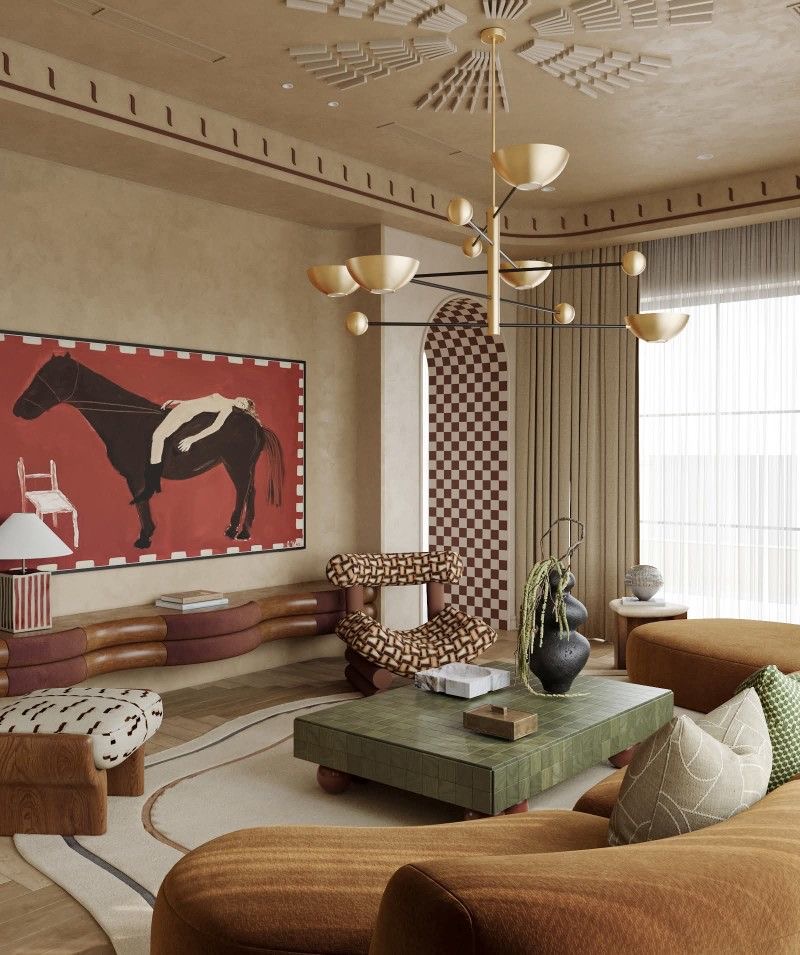
6. Comfortable Luxury Living Rooms
The living room is often the heart of the family home.
Luxury living rooms should feel elegant but also comfortable enough for everyday use.
Furniture should be selected based on:
- Ergonomics
- Scale
- Proportion
- Upholstery
- Seating depth
- Circulation
- Family size
Oversized sofas may create a welcoming environment in a large living room, while modular furniture can provide flexibility.
A combination of sofas, armchairs, side tables, rugs, lighting, and custom storage can create a balanced environment.
The goal is not to fill the room with expensive objects.
The goal is to create an environment where people naturally want to spend time.
7. Layered Lighting for a Sophisticated Atmosphere
Lighting has a major influence on the perception of luxury.
A single ceiling light rarely creates the atmosphere required for a high-end interior.
Instead, designers can combine multiple layers:
Ambient Lighting
Provides general illumination.
Task Lighting
Supports activities such as reading, cooking, or working.
Accent Lighting
Highlights artwork, architectural features, furniture, or materials.
Decorative Lighting
Adds visual character through chandeliers, pendant lights, floor lamps, and other fixtures.
Hidden LED lighting can also be integrated into custom furniture, wall panels, ceilings, and architectural details.
The result is a home that can change atmosphere throughout the day.
8. Creating Smart and Connected Homes
Technology is becoming increasingly important in modern luxury residences.
Smart home systems can control:
- Lighting
- Curtains
- Heating and cooling
- Security
- Audio
- Entertainment
- Access
- Energy management
However, technology should not dominate the interior.
The best smart home solutions are integrated discreetly into the architecture.
Control panels can be minimized, speakers can be integrated into ceilings, and lighting systems can be controlled through centralized platforms.
The result is a more comfortable and visually clean environment.
9. Storage Without Compromising Design
Storage is one of the biggest challenges in modern family homes.
Children’s belongings, clothing, books, technology, kitchen equipment, and everyday objects can quickly create visual clutter.
Luxury interior design can solve this problem through integrated storage.
Examples include:
- Full-height wardrobes
- Hidden cabinets
- Built-in bookcases
- Under-stair storage
- Custom kitchen systems
- Walk-in wardrobes
- Concealed media storage
Custom joinery allows storage to become part of the architecture rather than an additional object placed inside the room.
This approach helps maintain the clean aesthetic associated with contemporary luxury interiors.
10. Designing Bedrooms for Privacy and Comfort
Bedrooms should feel different from social spaces.
While living rooms and kitchens may be energetic and interactive, bedrooms should provide a sense of calm.
A sophisticated master bedroom can combine:
- Custom bed design
- Upholstered headboards
- Integrated bedside tables
- Soft lighting
- Natural materials
- Built-in wardrobes
- Acoustic considerations
- Comfortable textiles
For children’s bedrooms, flexibility is particularly important.
Furniture can be designed to adapt as children grow, creating a more sustainable and practical environment.
11. Creating Dedicated Home Offices
Remote and hybrid work have changed the way families use their homes.
A luxury home office should provide concentration without feeling disconnected from the rest of the interior.
Custom furniture can integrate:
- Work desks
- Storage
- Shelving
- Cable management
- Lighting
- Acoustic solutions
A well-designed home office can also be visually connected to the rest of the home while maintaining sufficient privacy.
12. Bringing Nature Into the Interior
Natural elements can make luxury homes feel warmer and more comfortable.
Biophilic design principles can be introduced through:
- Indoor plants
- Natural wood
- Stone
- Natural fabrics
- Large windows
- Garden views
- Natural light
The relationship between interior and exterior spaces is particularly important in villas and large residential properties.
Sliding glass doors, terraces, landscaped gardens, and outdoor living areas can extend the usable living environment.
13. Designing for Entertaining
Many luxury family homes are also designed for entertaining guests.
Entertainment spaces may include:
- Large dining rooms
- Open-plan kitchens
- Home bars
- Lounge areas
- Outdoor dining
- Media rooms
- Guest suites
The interior should allow guests to move comfortably between different areas.
Lighting and furniture arrangement can create distinct zones while maintaining a sense of openness.
14. Creating a Timeless Interior
Luxury interiors should ideally remain relevant for many years.
Following every design trend can quickly make a home look dated.
A timeless interior typically relies on:
- Strong architectural proportions
- High-quality materials
- Neutral foundations
- Natural textures
- Bespoke furniture
- Classic forms
- Carefully selected statement pieces
Trends can still be introduced through easily replaceable elements such as cushions, artwork, accessories, and decorative objects.
This creates a more sustainable approach to interior design.
15. The Importance of Craftsmanship
Even the best interior concept can lose its impact if the execution is poor.
Craftsmanship becomes especially important in luxury residential projects.
Cabinet alignment, joinery, material transitions, door gaps, surface finishes, hardware, and installation details all contribute to the final result.
This is why the relationship between interior design and furniture manufacturing is so important.
When designers and manufacturers work together, design details can be translated more accurately into the final product.
Explore more about the relationship between design and manufacturing in Furniture Design & Production: From Sketch to Showroom.
Luxury Living Spaces Should Feel Personal
The most successful luxury homes do not look like hotel rooms or furniture showrooms.
They reflect the people who live there.
Family photographs, artwork, books, collections, travel memories, and personal objects can give an interior a unique identity.
The role of the designer is to create a framework where these elements can exist naturally.
Luxury is ultimately about creating a better quality of life.
HAN-T: Interior Design and Bespoke Furniture
HAN-T brings together interior design, bespoke furniture design, manufacturing, logistics, and installation to develop tailored solutions for residential and commercial interiors.
From custom kitchens and wardrobes to living rooms, bedrooms, home offices, and integrated storage systems, every element can be developed according to the project’s architectural and functional requirements.
The process can include:
Project Analysis → Concept Development → Design → Technical Drawings → Material Selection → Manufacturing → Quality Control → Logistics → Installation
This integrated approach helps maintain consistency between the original design concept and the finished interior.
Conclusion
Designing a luxury living space for a modern family requires much more than selecting beautiful furniture.
The most successful homes combine architecture, functionality, comfort, technology, materials, craftsmanship, and personalization.
A luxury family home should support everyday routines while creating an environment that feels sophisticated and distinctive.
From bespoke furniture and integrated storage to layered lighting, smart technology and carefully selected materials, every decision contributes to the overall experience.
True luxury is not about having more.
It is about having the right design, the right materials, the right proportions, and the right details for the people who live there.
If you are planning a luxury residential project and looking for a partner for interior design and bespoke furniture solutions, HAN-T can help transform your vision into a carefully crafted interior.
Discuss Your Residential Project with HAN-T →
A luxury living space combines high-quality materials, bespoke furniture, thoughtful planning, sophisticated lighting, excellent craftsmanship, and personalized design to create a more comfortable and cohesive environment.
Bespoke furniture allows designers to create solutions specifically for the architecture, dimensions, storage requirements, and lifestyle of a family.
Natural wood, marble, stone, metal, glass, leather, and premium textiles are commonly used, although the best material depends on the function and design of each space.
Durable materials, practical layouts, integrated storage, comfortable furniture, flexible spaces, and easy-to-maintain surfaces can make luxury interiors suitable for everyday family life.
Yes. Lighting, climate control, security, entertainment, curtains, and other systems can be integrated into the architecture for a cleaner and more comfortable environment.
Custom joinery can maximize storage, respond to unusual architectural dimensions, and integrate furniture directly into walls and other architectural elements.
HAN-T develops bespoke furniture and custom interior solutions according to the requirements of individual projects.
HAN-T can develop tailored solutions for luxury residences, villas, apartments, and other high-end residential environments.