


Table of Contents
ToggleHigh-End Interiors: What Sets Them Apart
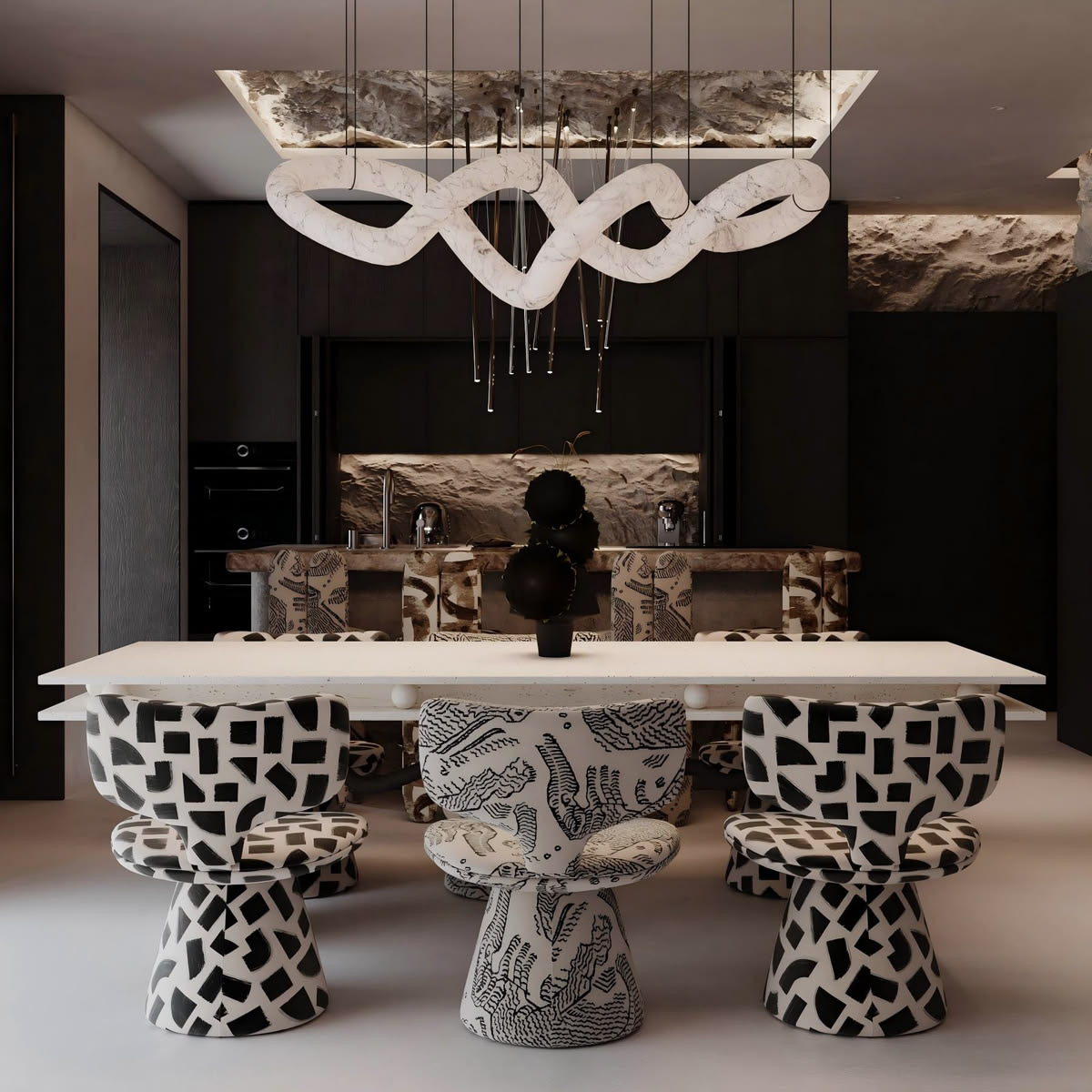
High-end interiors are not simply defined by expensive furniture, luxury materials, or impressive decoration. True high-end interior design is the result of carefully balancing architecture, functionality, craftsmanship, materials, lighting, technology, and attention to detail.
A luxury interior should feel intentional. Every material, furniture piece, lighting element, and architectural detail should contribute to the overall character of the space.
From luxury villas and private residences to hotels, restaurants, offices, and retail environments, high-end interiors are designed to provide a distinctive experience while meeting demanding functional requirements.
At HAN-T, we approach luxury interiors as complete environments rather than collections of individual products. By combining interior design, bespoke furniture, manufacturing, logistics, and installation, we help create sophisticated spaces in which architecture and furniture work together.
What Is a High-End Interior?
A high-end interior is a carefully designed environment in which quality, customization, craftsmanship, functionality, and aesthetics are considered together.
While luxury is often associated with expensive materials, price alone does not make an interior high-end.
A truly sophisticated interior may be characterized by:
Exceptional craftsmanship
Bespoke furniture
High-quality materials
Precise architectural detailing
Professional lighting design
Custom storage solutions
Carefully selected finishes
Integrated technology
Thoughtful spatial planning
Consistent visual identity
The difference is often found in the details that are not immediately obvious.
A custom cabinet may look simple, but its proportions, hardware, joinery, internal organization, material selection, and finishing can require significant design and manufacturing expertise.
This is what separates a high-end interior from an ordinary interior.
What Sets High-End Interiors Apart?
Several characteristics consistently appear in successful luxury interior projects.
1. Bespoke Design
One of the most important characteristics of high-end interiors is customization.
Standard furniture and ready-made products can be useful, but they cannot always respond to the specific dimensions, architecture, lifestyle, or brand identity of a project.
Bespoke design allows furniture and architectural elements to be developed specifically for the space.
Custom solutions may include:
Kitchens
Walk-in wardrobes
TV units
Libraries
Wall panels
Reception desks
Dining tables
Bathroom vanities
Office furniture
Retail displays
Instead of forcing a room to accommodate standard products, bespoke furniture allows the furniture to become part of the architecture.
For projects that require a high degree of personalization, this approach can significantly improve both aesthetics and functionality.
2. Exceptional Materials
Materials are fundamental to the perception of luxury.
High-end interiors often use materials such as:
Natural stone
Marble
Solid wood
Premium wood veneer
Metal
Glass
Leather
High-quality textiles
However, luxury is not about using as many expensive materials as possible.
The real skill lies in combining materials intelligently.
For example, warm walnut can be paired with natural stone, brushed metal, glass, and textured upholstery to create contrast and depth.
The relationship between materials is often more important than the individual price of each material.
A sophisticated interior may use only a few materials but combine them with exceptional precision.
3. Craftsmanship
Craftsmanship is one of the defining characteristics of high-end interiors.
Technology has transformed modern furniture production, but skilled craftsmanship remains essential for achieving refined results.
Experienced craftsmen are responsible for details such as:
Joinery
Surface preparation
Veneer matching
Edge detailing
Hand finishing
Hardware installation
Upholstery
Decorative elements
A high-end interior should feel carefully made.
When you touch a natural wood surface, open a cabinet door, sit on a custom chair, or examine a stone surface, the quality should be apparent.
This is why professional furniture design and manufacturing are closely connected to luxury interior design.
4. Architectural Integration
Luxury furniture should not look disconnected from the architecture.
High-end interiors often integrate furniture with walls, ceilings, floors, lighting, and architectural elements.
Built-in wardrobes, wall panels, libraries, kitchens, reception desks, and storage systems can be designed as part of the architectural concept.
This creates visual continuity.
Instead of seeing individual pieces of furniture, the user experiences one cohesive environment.
This principle is particularly important in contemporary luxury interiors, where clean lines and controlled proportions require precise coordination.
You can learn more about this approach in our article on Contemporary Interior Design.
5. Attention to Proportion
Proportion is one of the most underestimated aspects of luxury interior design.
Even the most expensive furniture can look inappropriate if its dimensions do not work with the room.
Professional designers consider:
Ceiling height
Room dimensions
Furniture scale
Door proportions
Window positions
Circulation
Visual balance
Negative space
A large living room may require furniture with greater visual weight.
A compact apartment may need carefully scaled pieces that provide functionality without making the space feel crowded.
Good proportion creates harmony without requiring excessive decoration.
6. Sophisticated Lighting
Lighting can completely transform a high-end interior.
Luxury interiors often combine several layers of lighting rather than relying on one central light source.
These layers may include:
Ambient lighting
Task lighting
Accent lighting
Decorative lighting
Architectural lighting
Integrated LED lighting can highlight architectural details, shelves, wall panels, artwork, and material textures.
Statement chandeliers and pendant lights can become visual focal points.
Natural light is equally important.
Large windows, skylights, glass partitions, and carefully positioned openings can help connect the interior with its surroundings.
The objective is to create an environment that looks different throughout the day.
7. A Carefully Controlled Color Palette
High-end interiors often use sophisticated color palettes rather than excessive color variety.
Neutral colors such as:
Warm white
Beige
Taupe
Grey
Brown
Black
Natural wood tones
can create an elegant foundation.
Accent colors can then be introduced through artwork, furniture, textiles, decorative objects, or architectural details.
The goal is not necessarily to create a completely neutral interior.
Instead, the color palette should feel intentional and balanced.
8. Texture Creates Depth
A luxury interior should not feel visually flat.
Texture creates depth and makes spaces feel more sophisticated.
A single room may combine:
Smooth marble
Natural timber
Soft upholstery
Textured fabrics
Brushed metal
Glass
Stone
Leather
These materials interact with light differently.
Some surfaces absorb light while others reflect it.
The result is a richer environment without requiring excessive decoration.
9. Custom Furniture Manufacturing
High-end interiors frequently require furniture that cannot simply be purchased from a catalogue.
Custom manufacturing allows designers to control:
Dimensions
Materials
Finishes
Hardware
Joinery
Colors
Proportions
Functionality
At HAN-T, the furniture production process can begin with a concept and continue through 3D design, technical drawings, material selection, manufacturing, quality control, logistics, and installation.
This integrated approach helps maintain consistency between the interior design concept and the final product.
Our Furniture Design & Production process demonstrates how a furniture concept can move from an initial idea to a finished product.
10. Invisible Details
Some of the most important details in a luxury interior are the ones that are barely noticed.
Examples include:
Concealed hinges
Integrated handles
Flush doors
Hidden storage
Precise shadow gaps
Concealed LED lighting
Integrated electrical systems
Carefully aligned panels
These details contribute to a feeling of precision.
When everything is aligned and carefully integrated, the space feels calm and sophisticated.
11. Technology and Smart Interiors
Modern luxury interiors increasingly integrate technology into the architecture.
Smart home systems can control:
Lighting
Temperature
Curtains
Security
Entertainment
Audio
Access
Energy systems
The best technology is often discreet.
Instead of dominating the interior, technology should support the user’s lifestyle while maintaining the visual integrity of the space.
For luxury residential projects, this can create a more comfortable and personalized environment.
High-End Residential Interiors
Luxury residential interiors are highly personal.
Unlike commercial environments, where a brand or customer experience may define many design decisions, residential projects need to reflect the lifestyle and preferences of the people living there.
High-end residential projects may include:
Luxury villas
Penthouses
Private residences
Duplex apartments
Holiday homes
Private apartments
Every room can have its own functional requirements while maintaining a consistent design language.
Luxury Living Rooms
A high-end living room often combines comfortable furniture with carefully selected materials, architectural lighting, artwork, and custom storage.
The objective is to create an environment that feels comfortable without sacrificing sophistication.
Luxury Kitchens
Luxury kitchens require a balance between aesthetics and functionality.
Custom cabinetry, premium countertops, integrated appliances, concealed storage, and carefully designed islands can transform the kitchen into both a working environment and a social space.
Luxury Bedrooms
Bedrooms should feel calm and comfortable.
Natural materials, soft textiles, integrated lighting, custom wardrobes, and carefully controlled colors can create a sophisticated atmosphere.
Luxury Bathrooms
High-end bathrooms often use marble, natural stone, premium fixtures, frameless glass, integrated lighting, and custom vanities.
Material continuity can make the space feel larger and more architectural.
High-End Hospitality Interiors
Hotels, restaurants, and hospitality environments have different requirements from residential projects.
They need to create a strong visual identity while supporting heavy use.
Luxury hotel interiors may include:
Reception areas
Guest rooms
Restaurants
Lounges
Bars
Corridors
Wellness areas
Every touchpoint contributes to the guest experience.
Furniture must therefore combine aesthetics with durability and functionality.
For hospitality projects, interior design and furniture manufacturing need to be closely coordinated.
High-End Restaurant Interiors
A luxury restaurant should create an atmosphere that supports the dining experience.
Lighting, acoustics, furniture, materials, circulation, and spatial planning all influence how customers perceive the environment.
Custom furniture can help reinforce the restaurant’s identity.
Tables, chairs, banquettes, bar counters, host desks, wall panels, and lighting features can all be developed as part of one design concept.
This approach is particularly valuable for restaurants that want to create a memorable brand experience.
High-End Office Interiors
Luxury office design is no longer limited to executive desks and traditional meeting rooms.
Modern high-end offices can include:
Executive suites
Collaborative spaces
Private meeting rooms
Lounge areas
Reception spaces
Flexible workstations
Custom storage
Wellness areas
The interior should reflect the company’s identity while supporting productivity and employee experience.
Custom office furniture can create a stronger relationship between workplace architecture and corporate branding.
High-End Retail Interiors
Luxury retail environments require a strong connection between architecture, branding, product presentation, and customer experience.
Display systems, shelving, lighting, counters, furniture, and circulation should work together.
In premium retail, the interior itself becomes part of the brand.
Materials and detailing therefore need to communicate quality before the customer even interacts with the product.
Sustainability in High-End Interiors
Luxury and sustainability are not mutually exclusive.
In fact, a well-designed high-end interior can be more sustainable because it focuses on durability and long-term use.
Sustainable approaches may include:
Durable materials
Responsible timber sourcing
Efficient manufacturing
Reduced material waste
Long-lasting furniture
Repairable components
Timeless design
Energy-efficient lighting
For responsible wood sourcing, the Forest Stewardship Council (FSC) provides an internationally recognized certification framework for responsible forest management.
The goal should be to create spaces that remain valuable and functional for many years rather than interiors that need to be replaced whenever trends change.
What Makes a Luxury Interior Timeless?
One of the biggest challenges in luxury interior design is avoiding trends that quickly become outdated.
A timeless high-end interior usually focuses on:
Strong proportions
High-quality materials
Good craftsmanship
Functional planning
Natural textures
Balanced colors
Architectural integration
Bespoke furniture
Trends can still be incorporated through elements that are easy to update.
Artwork, accessories, rugs, cushions, decorative lighting, and smaller furniture pieces can evolve over time without requiring a complete renovation.
High-End Interior Design Is About the Complete Experience
A truly luxurious interior is not defined by one expensive object.
It is the result of hundreds of decisions working together.
The floor should relate to the walls.
The walls should relate to the furniture.
The furniture should relate to the architecture.
The lighting should highlight the materials.
The materials should support the overall atmosphere.
Technology should work without distracting from the design.
This level of coordination is what creates a complete interior experience.
Why Choose HAN-T for High-End Interiors?
HAN-T combines interior design expertise with bespoke furniture manufacturing and project implementation.
Our approach can bring together:
Interior Architecture → Design Development → Furniture Design → Material Selection → Manufacturing → Quality Control → Logistics → Installation
This integrated workflow can help reduce communication gaps and maintain design consistency throughout the project.
HAN-T can develop custom interior solutions for:
Luxury villas
Private residences
Hotels
Restaurants
Offices
Retail environments
Commercial interiors
Showrooms
Our focus is not simply on producing furniture or creating attractive spaces.
The objective is to create complete environments in which architecture, furniture, materials, lighting, and functionality work together.
The HAN-T Approach to Luxury Interior Projects
Every project begins with understanding the client’s requirements.
The process can include:
01. Consultation
Understanding the project, lifestyle, brand, requirements, budget, and timeline.
02. Concept Development
Creating the initial architectural and interior design direction.
03. Material Selection
Selecting appropriate materials, finishes, colors, hardware, and textures.
04. Furniture Design
Developing bespoke furniture according to the dimensions and requirements of the project.
05. Technical Development
Creating detailed drawings and specifications for production.
06. Manufacturing
Producing custom furniture and architectural elements according to approved designs.
07. Quality Control
Checking dimensions, materials, finishes, hardware, and construction.
08. Logistics
Preparing and coordinating transportation and delivery.
09. Installation
Installing the furniture and interior elements at the project location.
This approach allows the design concept to remain connected to the final result.
Final Thoughts
High-end interiors are defined by far more than luxury materials.
They are distinguished by customization, craftsmanship, architectural integration, proportion, lighting, technology, functionality, and attention to detail.
The most successful luxury spaces feel effortless because every component has been carefully considered.
From a bespoke kitchen to a custom wardrobe, from architectural lighting to natural stone, every element contributes to the overall experience.
For residential, hospitality, office, retail, and commercial projects, an integrated approach to interior design and furniture manufacturing can provide greater control over quality, consistency, and execution.
At HAN-T, we combine interior design, bespoke furniture, manufacturing, logistics, and installation to help transform architectural concepts into complete high-end interiors.
High-end interiors are distinguished by bespoke design, high-quality materials, exceptional craftsmanship, precise detailing, sophisticated lighting, architectural integration, and carefully considered functionality.
No. Luxury is not determined only by material price. The quality of design, craftsmanship, proportions, detailing, customization, and how materials are combined are equally important.
Bespoke interior design is a customized approach in which the architecture, furniture, materials, finishes, and functional solutions are developed specifically for the requirements of a particular project or client.
Custom furniture allows designers to control dimensions, materials, proportions, finishes, storage, and functionality. It can also create a stronger visual connection between furniture and architecture.
Common materials include natural stone, marble, solid wood, premium veneer, metal, glass, leather, and high-quality textiles.
Yes. Smart lighting, climate control, automated curtains, security systems, entertainment systems, and integrated technology can all be incorporated into contemporary luxury interiors.
Yes. Durable materials, responsible sourcing, efficient manufacturing, long-lasting furniture, reduced waste, and timeless design can all contribute to a more sustainable luxury interior.
Yes. HAN-T combines bespoke furniture design and manufacturing with interior design and project implementation for residential and commercial projects.
HAN-T can support international projects through coordinated design, furniture manufacturing, logistics, and installation, depending on the scope and location of the project.