



Material selection in luxury interiors is not a final styling exercise. It is a sequence of technical, sensory and commercial decisions that determines how a space looks on opening day, how it feels in daily use and how gracefully it changes over time. The strongest schemes do more than assemble beautiful samples. They connect each finish to the architecture, expected wear, cleaning routine, indoor environment, fabrication method, installation tolerance and long-term maintenance plan.
That is why the best material is rarely the most expensive one in isolation. It is the material whose color, texture, performance and detailing suit a specific location, whose source and specification can be verified, and whose interfaces have been resolved before production begins. This guide explains the decisions behind a refined, durable and coherent luxury interior.
The material decision matrix at a glance
Decision | Question to ask | Risk if ignored |
Context | Where will the material be used and touched? | A visually appealing finish fails under actual wear. |
Appearance | How does it behave in daylight and artificial light? | Color, gloss and texture shift after installation. |
Performance | What moisture, heat, abrasion or impact will it face? | Premature staining, movement, scratching or damage. |
Maintenance | Who will clean it, with what products and how often? | A demanding surface becomes a daily burden. |
Fabrication | Can the detail be produced repeatedly at the required tolerance? | Misaligned joints and inconsistent finishes. |
Sourcing | Can origin, lead time, batch and certification be documented? | Delays, substitutions or unsupported sustainability claims. |
Life cycle | Can it be repaired, refinished or replaced locally? | Small damage requires expensive full replacement. |
1.Start with context not a sample
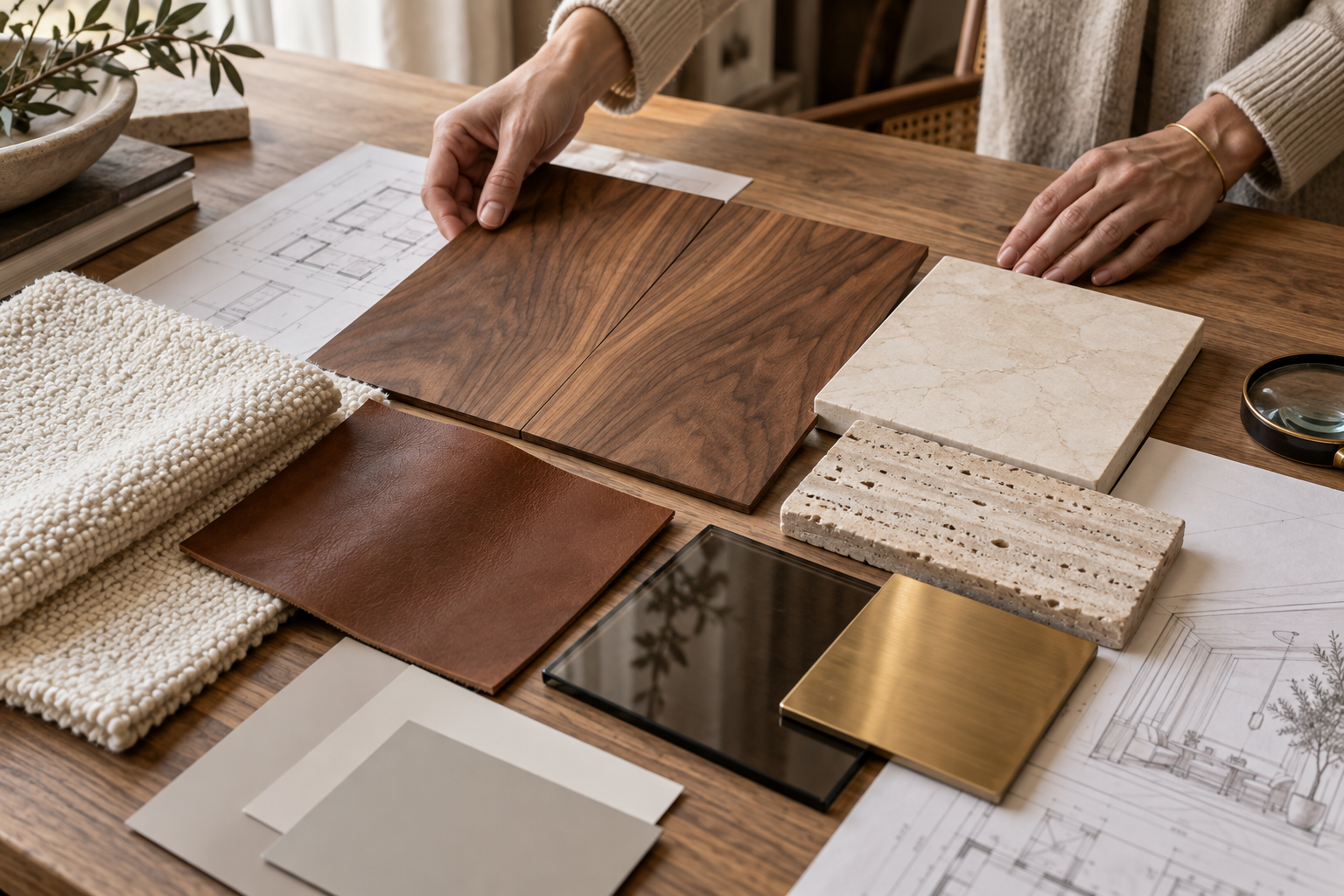
A material library encourages decisions by appearance: the most dramatic stone, deepest timber or softest textile naturally attracts attention. A project, however, is experienced at full scale and under changing conditions. Begin by defining the room, user profile, climate, orientation, circulation and operational expectations. A private formal lounge can accept a more delicate surface than a hotel entrance. A shaded bedroom and a sun-facing living room may need different veneer, textile and coating strategies even when they share one palette.
Map the points of contact. Floors, door pulls, worktops, armrests, dining surfaces and bathroom vanities receive repeated wear. Ceiling finishes, high wall panels and decorative niches are less exposed. The material hierarchy should respond accordingly: place the most resilient finishes where hands, shoes, water, heat and cleaning equipment are concentrated, then use more expressive or delicate materials where their character can be appreciated without constant risk.
Conceptual visualization: comparing material samples at full size and under controlled light.
2.Build a hierarchy of permanent and replaceable layers
Luxury interiors remain convincing when the most permanent decisions are quiet, precise and adaptable. Stone flooring, built-in joinery, wall paneling, doors and fixed lighting are expensive to remove. Their proportions, undertones and finish levels should support several future furniture or art directions. Upholstery, rugs, cushions and smaller metal accessories can carry stronger color or pattern because they are easier to refresh.
This hierarchy also improves budget control. Spend first on surfaces that are difficult to replace, details people touch every day and junctions that define perceived quality. A well-made door, correctly aligned veneer and carefully profiled stone edge can add more lasting value than a rare finish used without technical discipline.
3.Natural stone variation is part of the specification
Marble, limestone, travertine, granite and quartzite differ in mineral structure, porosity, hardness and visual variation. A small sample cannot communicate the movement of a full slab. Review high-resolution slab photographs, then reserve and inspect the actual slabs for important applications. Confirm the cutting direction, vein orientation, bookmatching sequence, edge profile, joint positions and how corners will turn. These choices determine whether the finished surface feels intentional or fragmented.
Performance must be matched to use. Some stones etch when exposed to acids; others show oil or water more readily. Honed finishes often feel calmer and may disguise minor wear better than a mirror polish, but every stone and finish needs its own test. Sealing is not a universal cure. The Natural Stone Institute notes that sealing can be useful in some conditions, while some stones are better left untreated and certain topical products may alter texture or create a less durable surface layer. Always test the proposed sealer, cleaner and finish on the actual selected stone before approving production.
For wet floors, stairs and exterior transitions, slip resistance, drainage, edge visibility and local code requirements matter as much as color. For fireplaces and heated locations, verify the assembly, substrate, adhesive and movement provisions rather than treating the stone as an isolated decorative layer.
4.Timber and veneer design the grain as carefully as the form
Wood brings warmth, tactility and acoustic softness, but it is also responsive to moisture, temperature and ultraviolet exposure. Solid timber is valuable where an edge, profile or structural section benefits from thickness. High-quality natural veneer can be the better choice across large doors and wall panels because it uses selected grain efficiently and can be engineered for greater dimensional stability.
Specify the species, cut, figure, matching method, sequence, substrate, edge treatment, stain, sheen and approved reference sample. “Walnut veneer” alone is not a complete specification. Crown cut, quarter cut and figured selections create different rhythms. Slip matching, bookmatching and sequence matching also change the result. The shop drawings should show where the grain starts, continues, changes direction and meets adjacent panels.
Ask how the finish will age. Clear coatings can warm or yellow; dark stains may reveal scratches; very open-pore finishes can trap contamination in demanding settings. Confirm cleaning methods and repair options. For responsible sourcing, request documented claims rather than relying on vague language. FSC explains that chain-of-custody certification is intended to track eligible forest-based material through production and distribution, so the relevant supplier and product paperwork matters if an FSC claim is required.
5.Metals specify the finish system not only the color
Brass, bronze, stainless steel, aluminum and coated steel can all appear warm or dark, yet they age differently. Clarify whether a finish is solid metal, plated, chemically patinated, painted, powder coated or physical-vapor deposited. Then define the sample, substrate preparation, gloss, brushing direction, clear protection and acceptance criteria. Two finishes both described as “antique brass” may have entirely different hues and maintenance needs.
Decide whether patina is desirable. Unlacquered brass changes with touch and time; a protected decorative finish aims to remain more consistent but can be difficult to repair invisibly after deep damage. High-contact hardware needs realistic testing for abrasion, cleaning chemicals and fingerprints. Where dissimilar metals meet, the technical team should consider compatibility and moisture exposure so hidden corrosion does not undermine a polished detail.
6.Glass and mirrors control safety reflections and access
Glass affects light, privacy, perceived depth and visual weight. Specify type, thickness, safety treatment, edge finish, color, distortion tolerance and fixing method. Low-iron glass reduces the green cast that becomes obvious against pale stone or white joinery. Smoked, fluted, textured and laminated glass can provide privacy, but their samples should be viewed both front-lit and back-lit.
Mirrors need equal care. Large panels can reveal waviness, distort reflected architecture or multiply lighting in unexpected ways. Review sightlines from seated and standing positions. Provide safe access to drivers, LEDs, hinges and concealed fixings; a flawless panel loses its value if routine maintenance requires destructive removal.
7.Upholstery leather and textiles beauty must survive touch
Textiles define comfort at the closest human scale. Assess abrasion resistance, pilling, seam slippage, colorfastness, light exposure, stain treatment, backing, fire requirements and cleaning method according to the project type and local regulations. Test the actual textile over the proposed foam and form: a fabric that looks relaxed on a flat memo sample may behave differently over a tight radius or tailored seam.
Natural leather varies in grain and develops a patina. Protected leather offers greater consistency and easier maintenance but can feel less natural. Neither is automatically more luxurious; suitability depends on the desired aging, use level and maintenance expectations. For removable covers, replacement panels and spare yardage, record the dye lot and storage plan before installation.
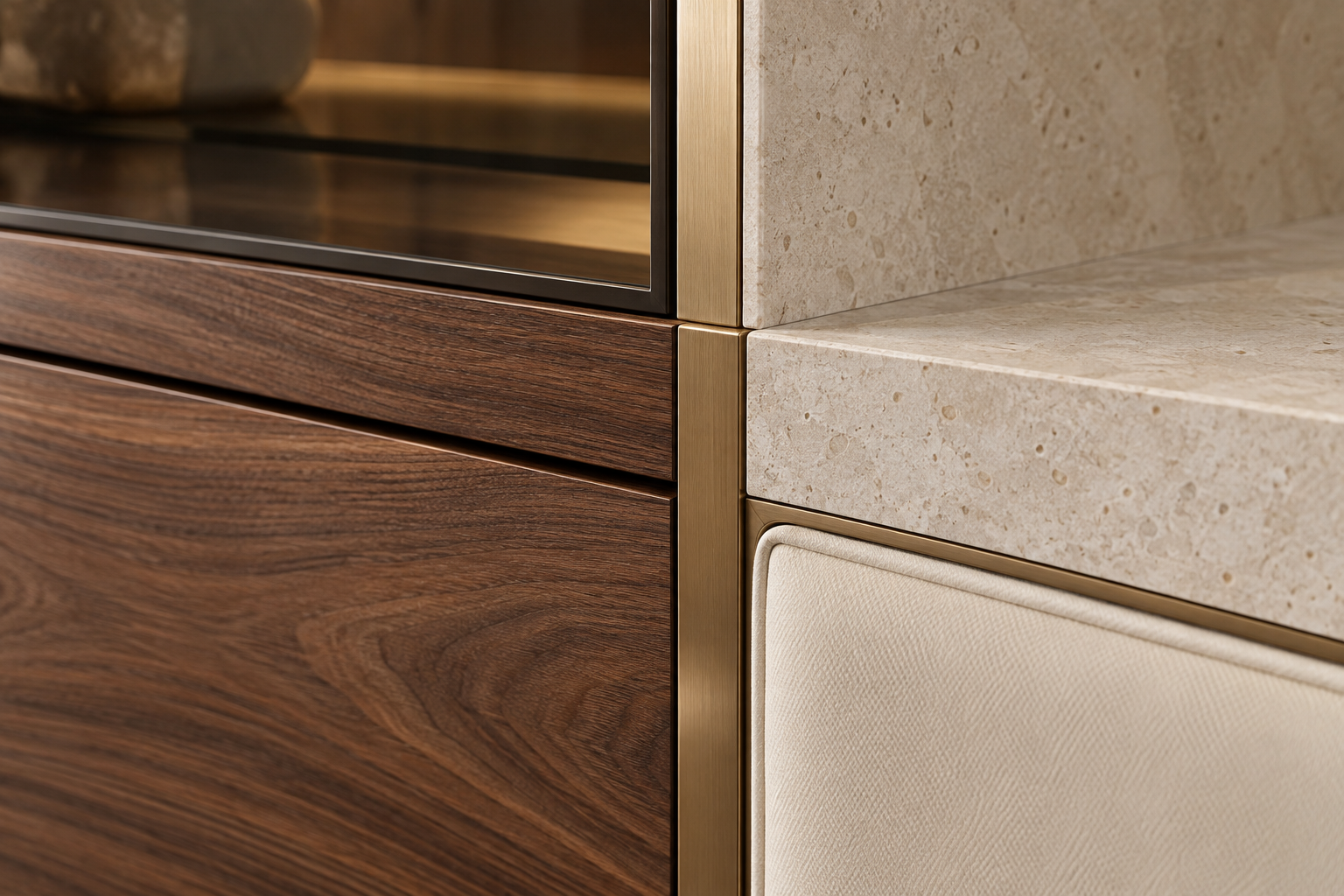
Conceptual visualization: a resolved junction aligns stone, timber, metal, glass and upholstery.
8.Engineered surfaces lacquer and composite panels
Engineered materials can deliver consistency, large formats and predictable performance. They are useful when a project requires repeatable color, reduced visual variation or specific maintenance properties. Their quality still depends on the complete assembly: substrate, adhesive, edge detail, joint design, finish build and installation conditions.
For lacquer, approve color and sheen on the real substrate at a useful size. Curves, routed profiles and panel edges reflect light differently from a flat sample. Confirm touch-up procedures and whether a damaged door can be refinished locally without a visible mismatch. With laminates and engineered stone, study exposed edges and junctions early; an unresolved edge can immediately disclose the construction in a way that weakens the intended luxury character.
9.Indoor air and material health
A premium interior should support comfort beyond appearance. Ask for documentation covering composite wood panels, adhesives, coatings, sealants and finishes. Requirements vary by market, so the project specification should identify the applicable regulation or certification rather than using “eco-friendly” as a substitute for evidence. In the United States, the EPA formaldehyde rule covers hardwood plywood, medium-density fiberboard and particleboard, as well as many finished goods containing them, and requires compliant labeling for regulated products.
Ventilation and curing time also influence the experience of a newly completed interior. Coordinate low-emission material goals with procurement and site sequencing, store products correctly and avoid last-minute substitutions that have not been reviewed. Documentation should be collected during selection, not after installation when alternatives are costly.
10.Samples mockups and lighting reviews
Luxury quality is approved through physical evidence. Build a sample ladder: initial reference samples, supplier samples, control samples, production samples and a project mockup where necessary. Label every approved piece with supplier, product code, batch, finish, date and approval status. A shared digital schedule should point back to the physical control sample so procurement, factory and site teams are reviewing the same standard.
View materials horizontally and vertically because gloss and texture respond differently by orientation. Review them in morning daylight, evening light and the final artificial-lighting temperature. Combine samples at their likely scale: a palm-sized stone chip next to a thin veneer strip can hide undertone conflicts that become obvious when a full slab meets a wall of joinery.
Critical mockups should include corners, reveals, handles, doors, stone edges, lighting channels and adjacent finishes. They are not only presentation tools; they test buildability, access, tolerance and cleaning. Approving one well-resolved junction can prevent repetition of the same defect across an entire project.
11.Design for durability maintenance and repair
Ask four practical questions for every major finish: How will it be cleaned? What will stain or scratch it? Can localized damage be repaired? What does acceptable aging look like? The answers should shape both selection and detailing. A surface that can be refinished may offer better long-term value than one that looks perfect initially but must be replaced after a single deep scratch.
Create a maintenance schedule before handover. Record approved cleaners, prohibited chemicals, sealing or refinishing intervals, replacement product codes and spare-material locations. Retain extra stone pieces, veneer leaves, fabric and specialist hardware when future matching may be difficult. This is especially important for natural materials and batch-sensitive colors.
12.Allocate budget by consequence
Value engineering should preserve the design intent and performance priorities, not simply replace every premium item with a cheaper look-alike. Protect the architectural moves that organize the space, the high-contact finishes, the focal junctions and the elements that would be disruptive to replace. Savings can often be found through smarter slab layouts, standardized hidden components, a more efficient veneer cut, reduced finish variety or alternative materials in low-visibility locations.
Compare installed cost rather than purchase price alone. Include fabrication complexity, substructure, edge treatment, wastage, freight, protection, installation, future maintenance and likely replacement. A lower-cost material that needs specialist installation or frequent renewal may not be economical over the life of the interior.
Material priorities by space
Space | Primary risks | Selection priority |
Entrance and circulation | Impact, grit, wet footwear, luggage | Durable flooring, repairable wall protection, robust edges |
Kitchen and bar | Heat, acids, oils, water, intensive cleaning | Tested worktops, sealed junctions, cleanable finishes, accessible hardware |
Bathroom and spa | Water, steam, slips, cleaning chemicals | Wet-area suitability, drainage, safe glass, ventilation, compatible sealants |
Living and dining | Sunlight, spills, repeated touch | UV stability, cleanable upholstery, resilient tables and hardware |
Bedroom and dressing | Touch, textile wear, quieter use | Tactility, acoustic comfort, low-emission finishes, soft lighting response |
Hotel or hospitality | High turnover, luggage, repeated maintenance | Replaceable modules, commercial-grade textiles, documented cleaning systems |
13.Coordinate material decisions with fabrication and installation
A material schedule becomes real only when it is translated into shop drawings, cutting lists, finishing systems and site interfaces. Involve fabricators before the design is frozen. They can advise on available sheet and slab sizes, grain direction, achievable radii, structural support, edge construction, hardware clearances and tolerances. Early collaboration protects the concept while reducing improvisation on site.
At HAN-T, the relationship between design and production is supported by specialized wood manufacturing, metal fabrication, upholstery, installation and logistics capabilities. This integrated approach is particularly valuable when several materials meet in one bespoke element: the team can coordinate the substrate, visible finish, metal insert, upholstery thickness, hardware and final fitting as one assembly rather than separate trades.
Explore the HAN-T factory and production departments, review the custom furniture production service, or contact HAN-T to discuss material selection, bespoke production and turnkey execution for a residential or hospitality project.
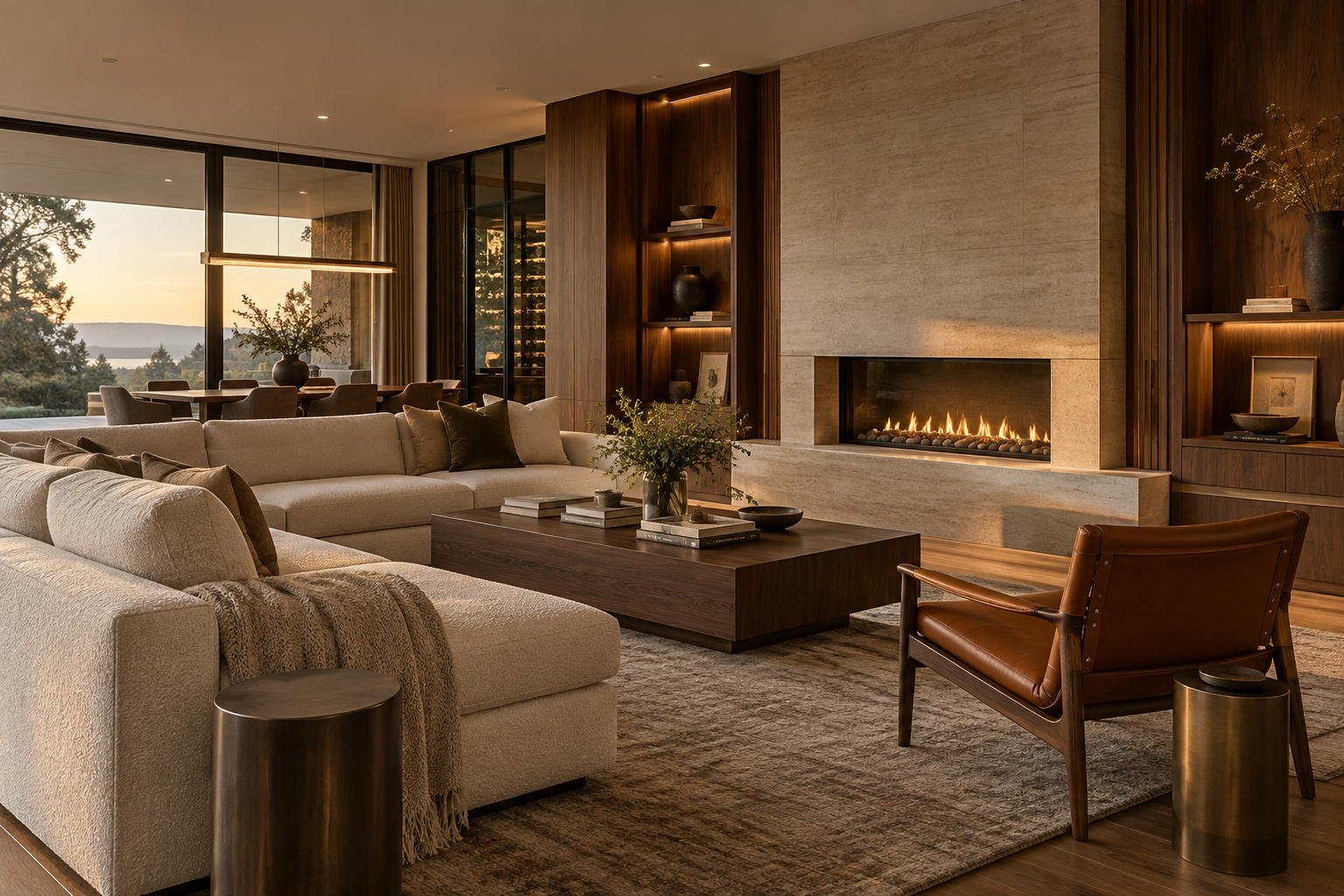
Conceptual visualization: a finished interior where material hierarchy supports warmth, durability and visual calm.
Common material selection mistakes
- Approving only small samples without reviewing full slabs, grain sequence or batch variation.
- Choosing by appearance before confirming moisture, heat, abrasion, slip or cleaning requirements.
- Using generic finish descriptions such as brass, walnut or beige stone without an approved control sample.
- Ignoring how adjacent undertones and sheen levels change under the final lighting design.
- Specifying a surface without resolving edges, joints, transitions, access panels and replacement strategy.
- Accepting unsupported sustainability or low-emission claims without product and supplier documentation.
- Changing material late in procurement without repeating the technical, visual and interface review.