


Table of Contents
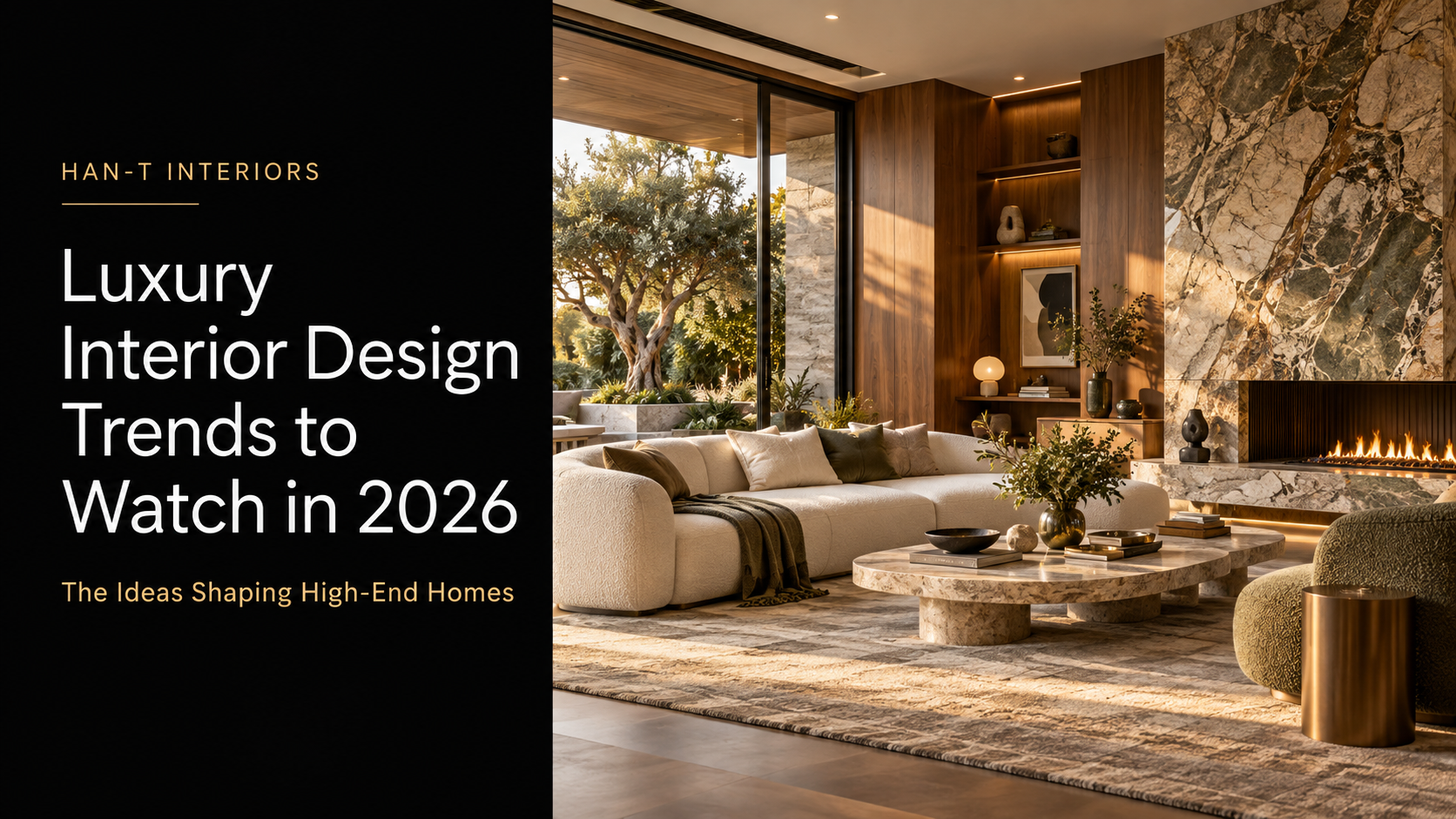
ToggleLuxury Interior Design Trends to Watch in 2026
Luxury interior design in 2026 is not moving in one stylistic direction. The strongest homes combine apparently opposite ideas: contemporary precision with historical references, calm architecture with expressive objects, advanced technology with visibly handcrafted materials, and private wellness with spaces designed for social life. The result is more personal, more tactile and more responsive to the people who live there.
This guide identifies the luxury interior design trends that have remained visible across 2026 design reporting, residential technology research and the ideas presented during Milan Design Week. It also explains which trends are worth adapting, which require caution and how homeowners, architects and developers can translate them into interiors with long-term value.
Luxury interior design trends for 2026 at a glance
Trend | What is changing | Best use in a luxury home |
Personal expression | Generic neutral schemes are giving way to curated color, art and meaningful objects. | Use a controlled architectural base and let selected rooms carry stronger identity. |
Material depth | Flat, flawless surfaces are being replaced by grain, patina, relief and handmade variation. | Prioritize natural stone, timber, plaster, metal and crafted textiles at close-touch areas. |
Lighting as architecture | Lighting is planned as a layered system rather than a set of decorative fixtures. | Coordinate daylight, ambient, task and accent light with automated shading. |
Invisible wellness | Health-supporting features are moving through the entire home. | Improve light, acoustics, air, temperature, bathing and recovery without a clinical look. |
Discreet technology | Convenience is increasing while screens, sensors and controls become less visible. | Integrate systems into millwork, ceilings and material details from the start. |
Flexible living | Rooms and furniture are becoming more adaptable to different uses and group sizes. | Use operable partitions, modular seating and concealed work or media functions. |
Heritage and craft | Historic references are being reinterpreted with contemporary proportions and performance. | Select one architectural language and update it through scale, color and detailing. |
Indoor outdoor continuity | Landscape, natural light and exterior rooms are part of the interior experience. | Align views, thresholds, materials and furniture instead of simply adding more glass. |
1-Personal expression is replacing generic luxury
For several years, high-end residential design was dominated by highly controlled palettes of cream, beige and pale timber. Those interiors photographed well, but many became difficult to distinguish from one another. In 2026, luxury is becoming more individual. Designers are introducing saturated color, pattern, collected art, unusual stone, personal archives and furniture with recognizable authorship.
This does not mean every room should become maximalist. The more valuable shift is from default neutrality to intentional identity. A residence may remain architecturally restrained while a library, dining room, powder room or private lounge carries deeper color and richer decoration. The space feels specific because the design responds to the owner rather than copying an online mood board.
A successful expressive interior still needs discipline. Repeated materials, consistent proportions and a clear hierarchy prevent personality from becoming visual noise. The strongest projects establish a calm background, choose a small number of focal moments and allow objects with genuine meaning to remain visible.
2-Natural materials are becoming richer and less perfect
Material luxury in 2026 is increasingly judged by depth, authenticity and how a surface changes over time. Book-matched walnut, richly figured stone, lime plaster, aged bronze, woven wool, saddle leather and handmade ceramic surfaces create visual interest that cannot be reproduced by a flat printed finish. Variations are not automatically treated as defects; they can become evidence of origin and craft.
The important word is controlled. Natural variation needs careful selection, sequencing and installation. Dramatic stone requires slab mapping before cutting. Timber veneer needs grain direction and color matching. Unsealed metals may patinate beautifully, but the client should understand how the finish will evolve. Luxury depends on making this variability intentional.
The long-term advantage is that authentic materials often gain character instead of merely looking worn. A well-specified surface can be refinished, repaired or allowed to mature. That makes material knowledge as important as the initial visual concept.
3-Walls floors and ceilings are becoming designed surfaces
The decorative focus is expanding beyond furniture. Sculptural plaster, relief panels, hand-painted tile, textile wall coverings, patterned stone and detailed ceilings are turning the architectural envelope into part of the artwork. This direction was prominent in 2026 design forecasting, where personalized tilework and crafted wall treatments appeared as alternatives to uniform, mass-produced surfaces.
In a luxury home, these elements work best when they are integrated into the architecture. A textured wall should respond to light. A tiled composition should align with openings and joinery. A detailed ceiling should support the room geometry rather than compete with it. Surface design becomes more convincing when it is developed with shop drawings, samples and full-scale mockups.
Because decorative surfaces are expensive to replace, highly specific treatments belong in carefully selected zones. Entrance halls, powder rooms, dining rooms, headboard walls and fireplaces can carry stronger expression, while circulation and primary living spaces may use quieter materials to maintain balance.
4-Lighting is becoming the infrastructure of luxury
Lighting is no longer a final decorative layer. It shapes how materials appear, how rooms change through the day and how comfortable a home feels after sunset. Lutron’s 2026 luxury residential research reported that 94 percent of surveyed designers and architects considered lighting highly important to clients, while layered lighting and automated shades were becoming core parts of residential planning.
A strong luxury lighting concept combines several systems. Natural daylight is filtered rather than simply maximized. Indirect ambient light establishes the room’s general brightness. Task lighting supports reading, cooking and dressing. Accent lighting reveals art, texture and architecture. Decorative fixtures add identity, but they do not carry the entire lighting load.
Controls should simplify this complexity. Instead of presenting residents with dozens of switches, scenes can coordinate lighting and shades for arrival, entertaining, dining, reading and evening relaxation. The technology should make the home feel intuitive, not technical.
5-Invisible wellness is moving through the whole home
Luxury wellness is expanding beyond a home gym or spa bathroom. The newer approach treats light, acoustics, air, temperature, water, scent, material health and access to nature as one connected residential system. The benefits are experienced continuously, even when the wellness features are not visually obvious.
Circadian-aware lighting can shift from brighter, cooler light in the morning to warmer, lower-intensity light at night. Acoustic treatments can be concealed in plaster, ceilings, upholstered panels and millwork. Shading controls reduce glare and overheating. Low-emission finishes, filtered air and thoughtful room orientation support comfort without making the residence resemble a clinic.
Dedicated amenities still have a place, including steam rooms, saunas, cold-plunge areas, meditation rooms and recovery lounges. However, their value increases when they connect naturally to bathrooms, gardens, dressing areas and daily routines. A beautiful room that is inconvenient to use quickly becomes an expensive display.
6-Smart home technology is becoming quieter
Clients continue to expect control over lighting, climate, security, shading, entertainment and energy use, but visible technology is becoming less desirable. The 2026 direction is not a less capable home; it is a home in which capability is integrated more carefully.
Screens can disappear behind artwork or within cabinetry. Speakers, sensors and access points can be coordinated with ceiling details. Charging can be incorporated into drawers and side tables. Control keypads can match metal finishes and align with architectural grids. Service access can remain hidden but reachable.
This level of integration must be planned early. Technology added after the joinery has been detailed often produces exposed cabling, awkward ventilation, extra wall controls and maintenance problems. Interior designers, lighting consultants, automation specialists and fabricators should coordinate before production begins.
7-Flexible spaces are replacing rigid room definitions
The luxury home is expected to support work, privacy, family life, entertaining, media and recovery without feeling like a multipurpose facility. This is encouraging more adaptable planning: operable partitions, pocket doors, modular furniture, movable screens, concealed desks and rooms that change character throughout the day.
Milan Design Week 2026 reinforced this direction through modular seating and reconfigurable objects that could shift between intimate conversation and larger social arrangements. The idea is especially relevant to large residences, where flexibility prevents rooms from remaining unused for most of the year.
Flexibility should not mean temporary-looking furniture or compromised comfort. Custom modular systems can maintain premium upholstery, precise proportions and concealed connection details. The goal is to expand how the room performs while preserving a coherent architectural identity.
8-Contemporary design is reconnecting with history
Historic references are returning, but the strongest projects avoid literal reproduction. Art Deco geometry, Vienna Secession details, traditional drapery, decorative trims, patinated metals and classical room proportions are being edited and combined with contemporary furniture, lighting and performance standards.
This approach gives a residence cultural depth. A historic building can retain original moldings while introducing slim contemporary joinery. A new home can use traditional symmetry without copying a period interior. A decorative textile can be applied to one carefully framed surface instead of covering every room.
The risk is pastiche. Before adding decorative references, the designer should understand the building, location and client. Heritage becomes luxurious when it feels connected to a story; it becomes superficial when it is used as an interchangeable visual theme.
9-Indoor and outdoor spaces are becoming one environment
Biophilic design is evolving beyond adding plants to a room. Luxury residential projects are using courtyards, filtered views, deep terraces, operable walls, water, natural ventilation and carefully framed landscape to organize the experience of the home. Nature is treated as an architectural material.
Successful continuity depends on thresholds. Floor levels, drainage, solar control, privacy, insect protection and exterior furniture storage all need technical resolution. Interior and exterior materials do not need to be identical, but they should share tone, scale or texture. Lighting should extend the visual depth after dark without creating glare against the glass.
The objective is not maximum transparency. A fully glazed room can feel exposed and uncomfortable. A better design alternates openness with shelter, using screens, planting, overhangs and framed views to create privacy and seasonal comfort.
10-Bespoke furniture and collectible craftsmanship are gaining value
As mass-market interiors become easier to reproduce, custom furniture offers a clearer form of distinction. A built-in cabinet can follow the architecture precisely. A dining table can respond to a particular room and family ritual. An upholstered piece can be tuned for posture, fabric performance and scale. The value lies in fit and authorship, not simply in rarity.
Craft is also visible in small details: matched veneer, hand-finished metal, tailored seams, shaped stone edges and the way multiple materials meet. These details are experienced every day and often determine whether an interior feels genuinely refined at close range.
Commissioning bespoke work requires more decision-making than selecting a standard product. Drawings, samples, prototypes, hardware, maintenance and installation tolerances should be approved before production. The process is more demanding, but it produces an interior that is harder to imitate and better connected to the client.
11-Longevity is becoming the most credible form of sustainability
Environmental responsibility in luxury design is moving from broad claims to practical decisions. Durable materials, repairable assemblies, efficient lighting, adaptable layouts and furniture that can be reupholstered or refinished can reduce replacement over the life of a home. Local production and documented sourcing can improve transparency, but longevity remains one of the most direct measures of value.
A trend should therefore be evaluated against its expected lifespan. Color can be updated relatively easily. A dramatic built-in stone wall, complex ceiling or highly specialized room is a larger commitment. Permanent elements should have architectural strength beyond a single season, while more experimental ideas can appear in textiles, art and movable pieces.
Luxury and sustainability align when fewer decisions need to be undone. Precise planning reduces site waste, quality fabrication extends service life and timeless proportions allow the interior to evolve without complete replacement.
Which 2026 trends require caution
Trend risk | Why it may fail | More durable alternative |
Maximalism copied as a formula | Too many focal points can remove hierarchy and make expensive materials compete. | Use expressive color or pattern in selected rooms and repeat a controlled material language. |
Oversized dramatic stone everywhere | Strong veining can dominate the architecture and date quickly. | Reserve statement slabs for one or two focal elements and use quieter supporting stone. |
Visible smart home hardware | Panels and controls can fragment carefully designed surfaces. | Coordinate discreet controls, service access and concealed technology before joinery production. |
Single-purpose wellness rooms | A specialized room may be used rarely and reduce future flexibility. | Connect wellness functions to bathrooms, gardens, dressing rooms or adaptable lounges. |
Trend-led custom furniture | Bespoke cost does not guarantee longevity if the form is overly fashionable. | Invest in proportion, comfort, quality construction and replaceable finishes. |
Continuous glass without privacy | More glazing can increase heat, glare and exposure. | Combine views with shading, screens, planting and protected transitional spaces. |
How to apply 2026 luxury interior trends
The best strategy is not to select every trend. Begin with the way the residents live, the architectural character of the property and the expected holding period. Then decide which ideas should influence permanent construction and which should remain easy to change.
• Define three project priorities, such as entertaining, wellness and art, before selecting materials or furniture.
• Create a restrained core palette for floors, major joinery and architectural stone.
• Choose two or three expressive moments where color, pattern, craft or collectible design can lead.
• Coordinate lighting, shading, climate and automation before ceilings and millwork are finalized.
• Approve physical samples under the project lighting rather than relying only on renderings.
• Review maintenance, repair and replacement access for every custom element.
• Use full-scale mockups for important material junctions, curved furniture and integrated technology.
How HAN-T translates trends into lasting interiors
HAN-T approaches trends as design inputs rather than fixed styles. The objective is to identify ideas that support the architecture, the client and the intended life of the property. Interior design, technical drawings, custom furniture production, material coordination, installation and quality control need to remain connected for that intention to survive construction.
This integrated process is particularly important when a project includes sculptural joinery, complex stone and timber interfaces, custom upholstery, lighting integration or concealed technology. These elements depend on early coordination between the design team, fabricators and site installers.
For related guidance, explore Luxury Villa Interior Design Trends 2026, review Premium Residential Interiors, or see why Sophisticated Interior Design depends more on timeless decisions than short-lived fashion.
Conclusion
The defining luxury interior design trends of 2026 are not isolated looks. They reflect a broader change in what high-end clients expect from a home: stronger identity, deeper material experience, better wellness, quieter technology, flexible living and details that reward close attention.
The most successful projects will not copy every trend. They will choose the ideas that strengthen the property and translate them through proportion, technical coordination, craftsmanship and disciplined installation. In that sense, the future of luxury is not simply more decoration or more technology. It is a home that feels personal, performs naturally and remains valuable after the trend cycle moves on.
To discuss a luxury residential project, contact HAN-T or explore the company’s factory and production capabilities.
The most important shift is toward highly personalized interiors. Natural materials, crafted details, expressive color, integrated wellness and discreet technology are being selected around the resident rather than applied as a universal style.
Yes, but it is becoming less generic. Quality, restraint and excellent craftsmanship remain valuable, while many homeowners are adding more color, art, pattern and historical character to avoid anonymous beige interiors.
Warm earth tones, olive, clay, ochre, chocolate, deep blue and selected saturated accents are prominent. The stronger trend is not one color but greater confidence in using color to shape atmosphere and identity.
Lighting, shading, climate, security and entertainment systems are increasingly coordinated through simplified controls. The best systems are planned early and concealed within the architecture while remaining accessible for maintenance.
Natural stone, carefully selected timber, tactile plaster, quality metals, wool, linen, leather and handcrafted ceramic surfaces can create depth. Luxury depends on correct selection, detailing and installation more than the price of a material alone.
Layered lighting, durable natural materials, adaptable planning, discreet technology, bespoke storage and repairable furniture have stronger long-term value than highly specific decorative themes. They improve daily use while allowing the visual style to evolve.