


Luxury home design in 2026 is becoming more personal, tactile and operationally intelligent. The strongest interiors are moving beyond one universal beige aesthetic toward homes that express their owners through color, collected objects, craftsmanship and rooms designed for long-term living. At the same time, wellness and technology are becoming less visible but more influential in the way a home performs.
This does not mean every trend belongs in every project. A luxury interior should outlast a seasonal mood. The useful question is not “What is fashionable?” but “Which emerging ideas will improve this home, suit its architecture and remain convincing after 2026?”
Recent signals support this more expressive direction. The ASID 2026 Trends Outlook describes a renewed appetite for saturated color, playful silhouettes and visible personality. The 1stDibs 2026 designer survey reports stronger interest in maximalism, chocolate brown and vintage or antique pieces, while the Houzz 2026 home design forecast highlights warmer woods, richer color and specialized rooms. Together, these point to luxury that feels individual rather than standardized.
How this article differs from villa trend coverage
HAN-T’s guide to luxury villa interior design trends for 2026 focuses on villas, quiet luxury, warm minimalism, natural materials, biophilia, bespoke furniture and invisible technology. This article takes a broader residential view and examines the next layer of change: more expressive color, collectible design, adaptive spaces, wellness infrastructure and the practical decisions required to use these ideas without creating a short-lived interior.
1 Personality replaces the universal luxury look
For several years, many high-end interiors followed a similar formula: pale stone, light oak, curved cream furniture and minimal decoration. Those ingredients can still produce beautiful spaces, but repetition has reduced their ability to communicate identity. In 2026, luxury homes are becoming more specific to the owner, location and architecture.
Personality can come from art, books, travel objects, regional craft, a confident wall color or an unusual furniture silhouette. The objective is not visual chaos. It is selective expression. A room may retain a calm architectural framework while allowing one or two elements to carry more character.
This shift is strategically useful for homeowners because personal interiors are less dependent on resale-friendly sameness. They can evolve through objects and textiles without rebuilding the entire room. The architecture remains disciplined; the layers become more individual.
2 Chocolate brown and saturated accents add depth
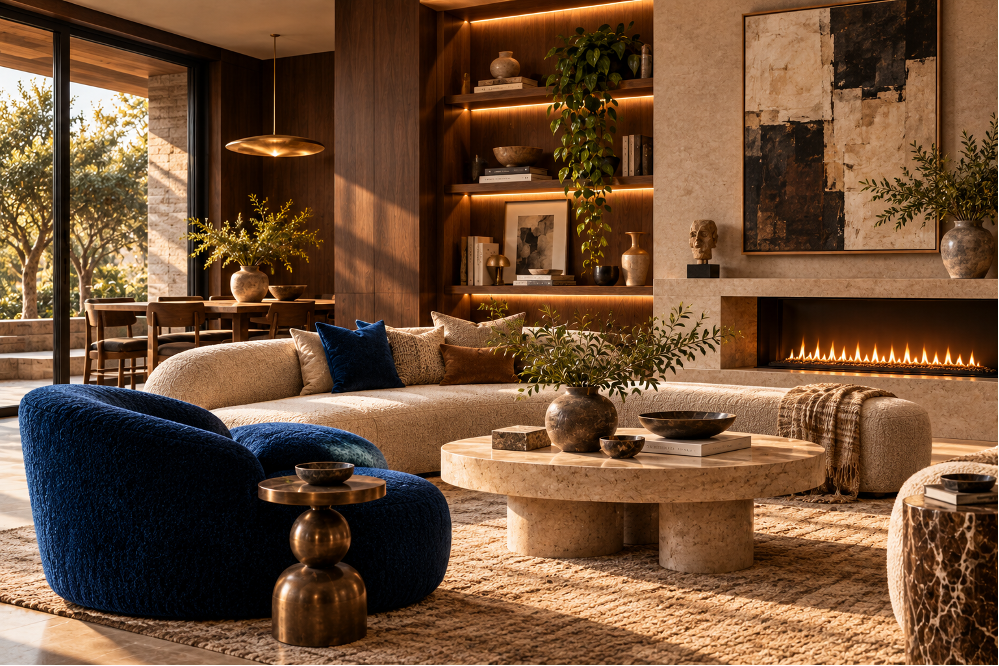
Chocolate brown is one of the clearest color signals for 2026. It works across walnut, leather, lacquer, stone and textiles, creating warmth without the flatness that can result from an all-beige palette. Deep browns also form a strong background for art, brass, aged metals and natural greenery.
Saturated accents are also returning. Cobalt blue, oxblood, aubergine and mineral green can make a restrained room feel more intentional. In a luxury home, these colors are strongest when concentrated: a sculptural chair, a lacquered cabinet, a rug, a painted library or a piece of art. Repeating the accent in small details can connect the composition without turning the room into a theme.
Color should be tested under the actual daylight and artificial lighting of the project. Dark tones can feel rich in a bright room and heavy in a poorly lit one. Samples, mock-ups and evening reviews are more reliable than choosing from a screen.
Conceptual visualization: warm walnut, chocolate brown, a restrained cobalt accent and collected objects create a more personal luxury interior.
3 .Natural materials become more tactile
Natural materials remain central, but their treatment is changing. Highly polished and uniform surfaces are giving way to texture, visible grain and controlled imperfection. Honed stone, lime plaster, deeply grained timber, woven textiles, clay, aged metal and hand-finished surfaces make the interior feel more human and materially grounded.
This trend requires discipline. Texture should not be applied to every surface. Select the areas where touch and light make the material meaningful: a stone island, a plaster stair wall, timber cabinetry or a woven headboard. Smooth surfaces elsewhere create contrast and make the tactile elements more visible.
Material quality should include performance. Review staining, sunlight, moisture, cleaning, repair and replacement before approval. A finish that photographs well but cannot tolerate daily use is not a luxury decision; it is a future maintenance problem.
4 Vintage and collectible pieces create authenticity
The renewed interest in vintage and antique furniture reflects a desire for interiors that feel assembled over time. A collectible table, restored chair, historic textile or locally crafted object can introduce scale, patina and narrative that new products do not automatically provide.
The most convincing rooms do not copy a historic period. They combine old and new through proportion, material and tone. A contemporary sofa may sit beside an antique side table; a modern kitchen may include a vintage artwork; a clean architectural shell may hold a handcrafted cabinet with visible joinery.
For project planning, unique pieces should be selected early enough to influence dimensions and layouts. Confirm condition, restoration needs, electrical compliance for lighting, transport and insurance. A rare object becomes a design asset only when it can be integrated safely and practically.
5 Sculptural comfort replaces decorative excess
Furniture silhouettes in 2026 are becoming fuller, softer and more expressive. Curved seating, generous lounge chairs and substantial tables create presence through form rather than applied decoration. Comfort is part of the visual language: the room should invite use, not simply admiration.
Scale is critical. One sculptural piece can organize a room; several oversized forms can block circulation and views. Test furniture footprints in plan, confirm seat depth and height, and consider how people move around the piece. For a tailored result, custom furniture can adjust a strong silhouette to the exact proportions of the room.
6 Wellness becomes residential infrastructure
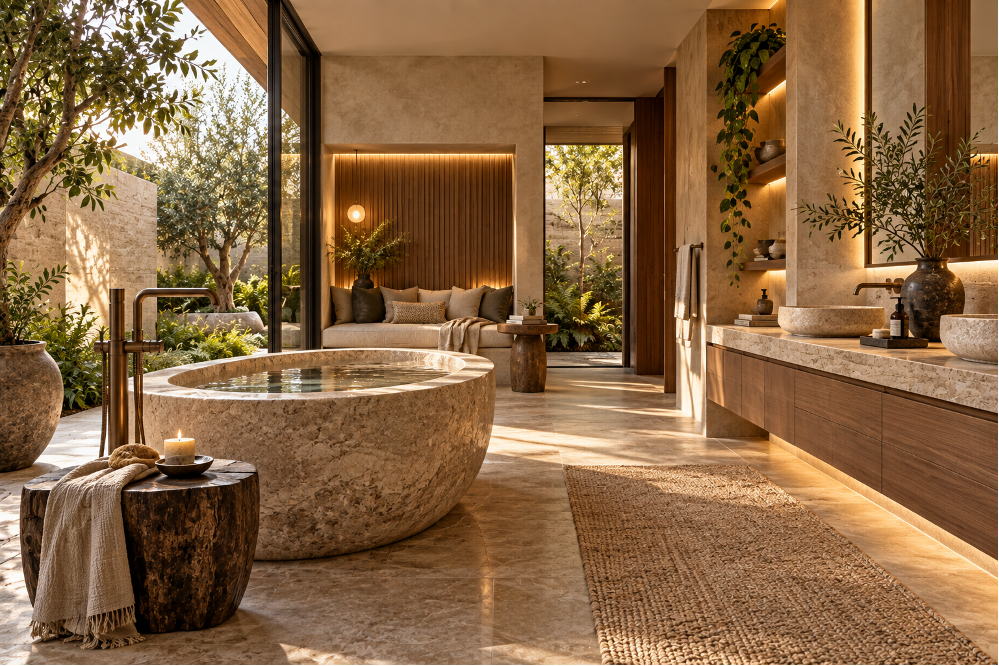
Wellness is moving beyond the dedicated home gym or spa bathroom. It is influencing daylight, air quality, acoustics, thermal comfort, water, material selection and the ability to disconnect. The Global Wellness Institute identifies circadian lighting, neuroarchitecture and strategies that reduce hidden pollutants as important directions in 2026.
In practice, this can mean bedrooms with better blackout and acoustic control, bathrooms that support recovery, reading rooms without screens, filtered air and water, shaded outdoor rooms, and lighting scenes that change naturally through the day. These features should be planned with the architecture and services, not added as decorative accessories.
A wellness-focused home does not need to look like a clinic or resort. Natural materials, comfortable temperature, quiet, daylight and intuitive controls can deliver a stronger daily benefit than a room filled with specialized equipment.
Conceptual visualization: a residential wellness suite combines natural light, stone, timber, planting and quiet layered illumination.
7 Technology becomes quieter and more useful
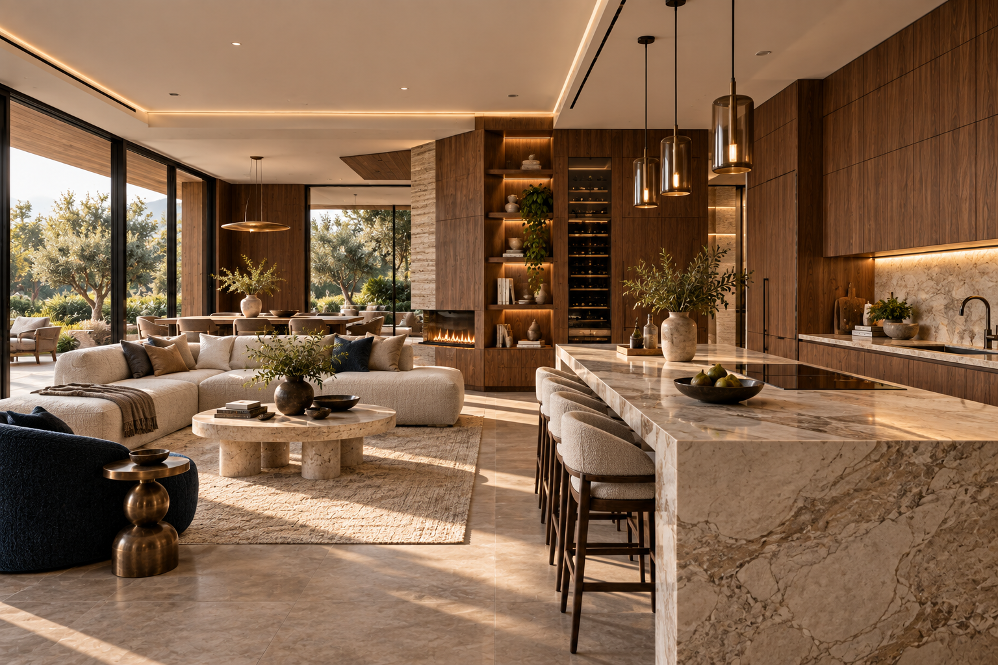
Smart-home systems are most successful when they reduce friction. In 2026, luxury is not a wall crowded with screens. It is lighting, climate, shading, audio, security and energy management that are coordinated, understandable and discreet.
Technology should be planned early enough to align with ceilings, cabinetry and furniture. Sensors, speakers, access panels, cable routes and ventilation need defined locations. Controls should remain usable when a phone is unavailable, and essential systems should not depend on one complicated interface.
Future access matters as much as visual concealment. Equipment will change faster than stone, timber or joinery. Serviceable panels, modular components and documented wiring routes allow technology to be upgraded without damaging the interior.
Conceptual visualization: smart lighting, shading, climate and appliances are integrated into architecture and joinery rather than displayed as gadgets.
8 Custom storage supports calmer homes
The return of personality does not eliminate the need for visual order. In fact, expressive interiors work better when storage is carefully planned. Libraries, wardrobes, kitchen walls, utility rooms and media cabinetry can hold the practical volume of daily life while leaving selected objects visible.
The Houzz trend reports point to growing interest in specialized storage and rooms tailored to specific activities. For a luxury home, that may include a concealed pantry, dressing room, wine storage, sports equipment room, home office library or organized charging zone. Storage should be designed around real inventories, not generic assumptions.
HAN-T’s work in custom joinery and luxury kitchen interiors shows how furniture, equipment and services can become part of one architectural elevation. This approach is especially valuable when the interior needs clarity without losing character.
9 Rooms become more adaptable and long term
Luxury buyers are placing greater value on homes that can change with family structure, work patterns and age. A guest room may need to function as a study. A ground-floor room may later require greater accessibility. An entertainment area may shift between social gatherings and quiet family use.
Adaptability does not require temporary-looking furniture. Sliding panels, flexible lighting, generous circulation, movable tables, modular seating and furniture designed for more than one use can support change while preserving a refined appearance. Technical infrastructure should anticipate future power, data and storage needs.
This is also a financial decision. Selective flexibility can reduce the need for major renovation and protect the usability of the property. It is more valuable than filling the home with mechanisms that are rarely used.
10 Craftsmanship becomes the proof of luxury
As interiors become more personal and materials more tactile, workmanship becomes easier to see. Veneer matching, stone junctions, metal transitions, upholstery seams, shadow gaps, hardware and installation alignment determine whether a room feels resolved.
This is why design and production coordination matters. Drawings must define dimensions, materials, interfaces and responsibilities. Samples should be approved under project lighting. Critical elements may require mock-ups. HAN-T’s factory capabilities connect woodworking, metal, upholstery, quality control, packing and installation within a coordinated production process.
Craftsmanship is not decorative complexity. A simple wall of cabinetry may require more precision than an ornate object because every line and junction is exposed. In 2026, that quiet accuracy remains one of the most durable expressions of luxury.
How to use trends without creating a dated interior
Trend signal | Durable interpretation | High risk interpretation |
Saturated color | One controlled accent tied to art or material | Multiple competing statement colors |
Vintage pieces | A few verified pieces integrated by scale | A room copied from one historical period |
Sculptural furniture | One strong form with tested comfort | Oversized pieces that block circulation |
Wellness | Daylight, acoustics, air and restorative rooms | Expensive equipment without daily use |
Smart home | Invisible, serviceable and intuitive systems | Screens and proprietary gadgets everywhere |
Natural texture | Selected tactile surfaces suited to use | Fragile finishes applied across every surface |
The strongest approach is to identify the project’s permanent framework first: plan, circulation, daylight, storage, services and material strategy. Trends can then influence color, furniture and selected details. This makes future changes easier and protects the larger investment.
How HAN-T approaches luxury residential interiors
HAN-T treats luxury residential design as a connected process. Interior architecture establishes the plan, proportions and design language. Technical development coordinates lighting, services, materials and furniture. Production translates approved details into physical elements, while logistics and installation protect the result through completion.
This integrated model is useful for premium residential interiors where custom furniture, stone, metal, lighting and technology need to align accurately. Depending on project scope, clients can explore turnkey interior design, luxury bathroom interiors, custom joinery and factory capabilities as part of one coordinated delivery strategy.
Planning a luxury home project? Contact HAN-T with the location, approximate area, design stage, required services and target schedule to begin a focused discussion.
Conclusion
The most important luxury home trends of 2026 are not isolated colors or shapes. They reflect a larger change in priorities: personality over sameness, tactile quality over perfect uniformity, wellness over visual performance alone, and technology that supports life without dominating the room.
A successful project will not use every trend. It will select the ideas that strengthen the architecture, serve the household and justify their cost. When design, custom production and installation remain coordinated, a home can feel current in 2026 while retaining the depth and quality to last well beyond it.